Cedar, Plastic and a Victorian Obsession: What the Humble Shoe Tree Is Actually For
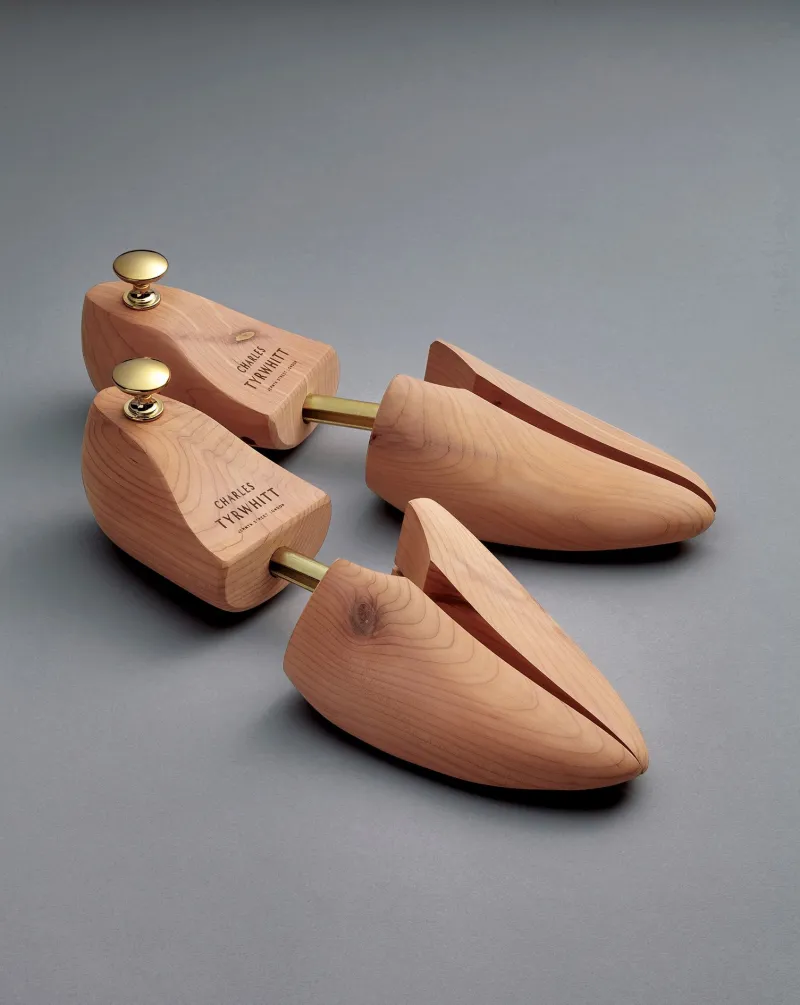
Photo: wooden cedar shoe trees in leather dress shoes, via i.pinimg.com
Every so often, in a charity shop or a grandad's wardrobe, you'll spot them: a pair of varnished wooden feet, sprung at the ankle, gazing up at you with an expression of permanent mild surprise. The shoe tree. Mysterious to some, indispensable to others — and with a history far more interesting than a stick of scented wood has any right to be.
From Gentleman's Club to Everyman's Hallway
Shoe trees as we know them took hold in the Victorian era, when a leather pair of boots was an investment on par with a month's rent. The gentlemen's clubs of St James's had boot rooms staffed by valets whose entire job was keeping members' footwear in shape — and the tree was their chief weapon.
By the early twentieth century, the sprung wooden tree was standard kit for any man with a decent pair of Oxfords. Then came the wars, then came trainers, and the shoe tree quietly fell out of fashion — retreating to estate sales and, eventually, the bargain bins of eBay, where bundles of them now go for the price of a pint.
Do They Actually Work? We Asked a Cobbler
'People think it's about creases,' says Martin, a third-generation cobbler we reached in Leeds. 'It's partly that. But really it's about moisture.'
His logic is simple: a day's wear pumps sweat into leather, and damp leather stiffens, cracks and creases as it dries. A tree inserted after wear holds the shoe taut and — if it's the right wood — wicks that moisture out.
'The crease thing is real too,' he adds. 'A leather shoe that's dried flat will last you twenty years. One that's dried crumpled? Ten, if you're lucky.'
Cedar vs Plastic: The Verdict
Cedar (or beech) trees — the real deal. Cedar is naturally moisture-absorbing and smells like a forest holiday. Look for a fully sized last (a split-toe design with a full heel is best) rather than a stick with a blob on the end. Expect £15–£40 a pair, and treat it as a one-time cost per shoe.
Plastic trees — cheap, lightweight and travel-friendly, but they absorb nothing. They'll hold a shape and that's about it. Fine for holiday shoes; pointless for leather you care about.
The eBay route — genuinely viable. Old brass-knobbed trees from defunct English makers turn up for a fiver. Check for cracks and give them a light sand; they'll outlive you.
The Practical Rules
- Insert trees within half an hour of taking shoes off — moisture sets as it cools.
- One pair of trees per pair of shoes, rotated with wear.
- Never force an oversized tree in; you'll stretch the leather the wrong way.
- Sand cedar lightly once a year to revive the absorbency and the smell.
Is it a bit precious, in this day and age, to own wooden feet for your shoes? Perhaps. But at £20 to add a decade to a £150 pair of brogues, it's also the best value in footwear — and a small, strange pleasure every time you open the wardrobe.